






Designing better healthcare experiences 30% faster with Figma
Time to read: 4.5 minutes
Summary: Doctor Anywhere (DA), a leading healthcare provider in Southeast Asia, is shaping the future of healthcare in Singapore, Malaysia, Thailand, Indonesia, Vietnam, and the Philippines.
Starting as a telemedicine platform, DA has evolved into a comprehensive, tech-driven healthcare provider, offering preventive care, primary care, specialist care, corporate healthcare solutions, third-party administration (TPA) services, and customised white-label solutions for insurance and industry partners.
A design system isn’t just for designers—it’s for everyone. Engineers save time by reusing components instead of rebuilding them, while stakeholders and the marketing team benefit from branding consistency.
— Anna Blukacz, Lead Product Designer, Doctor Anywhere
To deliver a seamless experience for patients, corporate employees, and healthcare professionals, DA’s design team relies on Figma as the backbone of its operations. By introducing the Gravity design system and leveraging Figma’s features like FigJam, variables, and Dev Mode, DA increased design efficiency by 30%, enhanced cross-brand consistency, and delivered accessible, user-centric digital healthcare experiences tailored to Southeast Asia’s diverse audiences.
Challenge: Creating consistent workflows across a growing ecosystem
When Doctor Anywhere first launched its telehealth app in Singapore, the design needs were straightforward. However, as the company expanded into new countries and services spanning preventive health, specialist care, and corporate healthcare solutions, the complexity of its digital design ecosystem grew substantially.

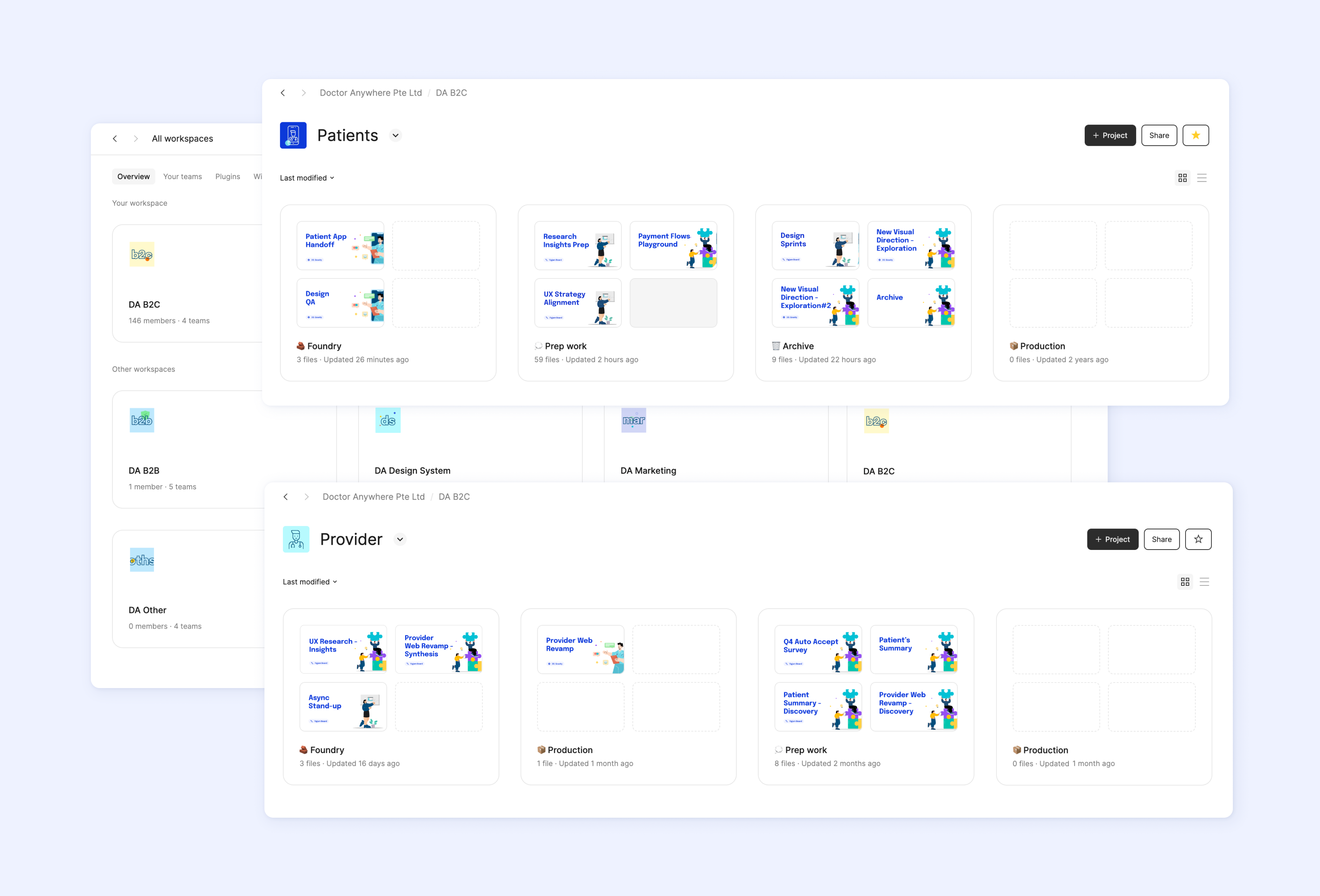
DA’s digital ecosystem — including the telehealth app, provider platforms, third-party administration platform, and partner solutions — lacked cohesion, leading to inconsistent branding and inefficient workflows that hindered scalability and streamlined operations.
DA’s Lead Product Designer, Anna Blukacz, says, “When you start with just one application or product, you have control over the experience. But as you grow, you build new features and integrate more services. At some point, the UI across our platforms no longer felt cohesive, and the branding wasn’t strong enough to tie everything together.”
Meanwhile, DA’s white-label solutions for corporate and insurance partners required customised branding for every client. Without a dynamic, centralised design system, each project demanded the creation of separate libraries and prototypes—a time-consuming and error-prone process.
“We used to spend hours building separate libraries for each client. Any changes meant going back and updating multiple files—it was a lot of work,” says Product Designer Vani Balasundaram.
Solution: A design system built on Figma to unite platforms and brands
To tackle these challenges, DA turned to Figma’s all-in-one design platform. In 2022, they upgraded to an Enterprise licence, unlocking advanced features like multi-brand modes and scalable workflows.

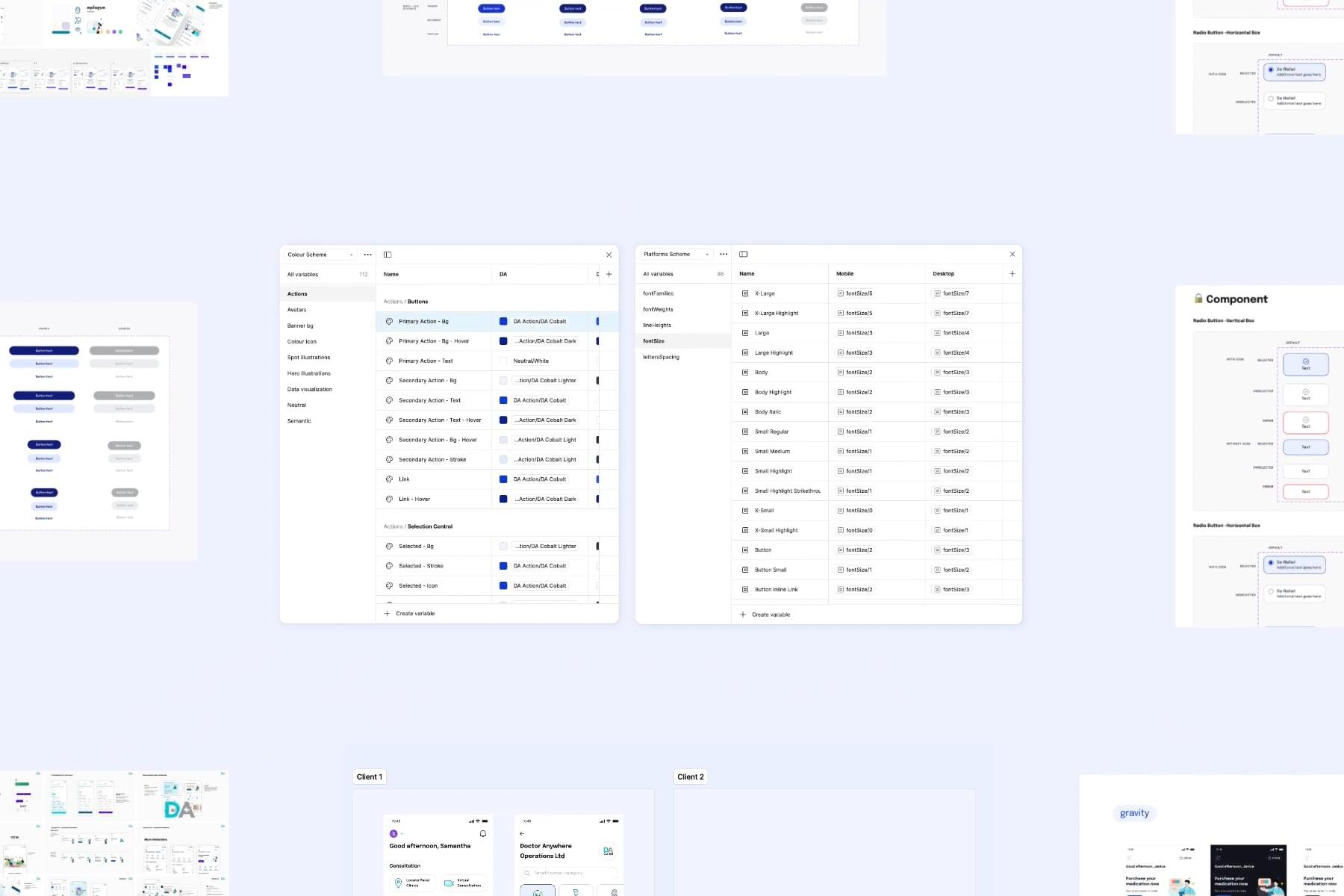
A year later, they introduced the Gravity design system—a single source of truth built entirely in Figma.
Gravity unified DA’s platforms by consolidating reusable components, design tokens, and typography rules into a centralised library. This ensured consistency across all platforms while enabling rapid customisation for white-label solutions.
“In the past, we often had to recreate very similar UI components for different projects, just because there was no centralised place to access and reuse them,” says Anna.
One of Gravity’s most transformative impacts was its ability to streamline onboarding for new clients. What once took hours—building foundational libraries for each client—now takes just 15 minutes. Figma’s variables and multi-brand modes made this efficiency possible.
“When prototyping for a client, we create a foundational library with tailored colours and icons, which can be swapped to adapt visuals for new screens and layouts,” says Product Designer Loh Chor Boon.
Gravity’s scalable features didn’t just save time—it also ensured consistency as DA’s operations grew. By streamlining workflows and aligning teams around a shared system, Gravity empowers Doctor Anywhere to scale with confidence, delivering consistent, high-quality digital experiences that redefine what’s possible in modern healthcare.
Figma was pivotal in scaling our design efforts, with design tokens and multi-brand modes streamlining management across Doctor Anywhere’s brands. These features save time by allowing us to update designs efficiently while customising visuals for each brand’s style—without starting from scratch.
— Fernandino Layno, UI Designer, Doctor Anywhere
Enhancing collaboration across teams with FigJam

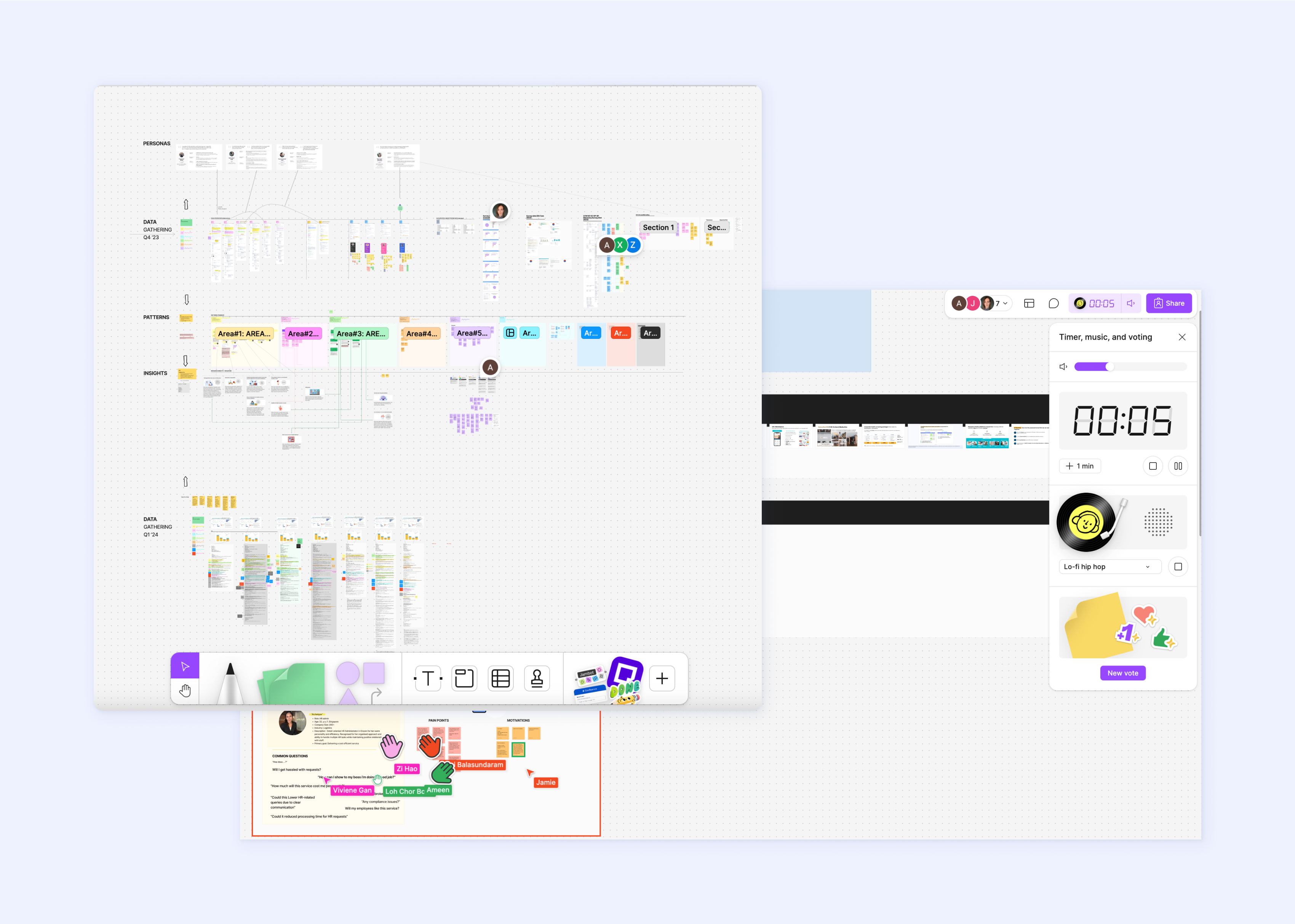
As DA’s portfolio grew, aligning cross-functional teams became a priority. FigJam quickly became the team’s go-to tool for collaboration, helping them bring together designers, product managers, engineers, and stakeholders. Anna says, “FigJam has been very helpful for brainstorming and design critiques, especially with cross-team collaboration.”
For example, FigJam has been instrumental in creating seamless digital experiences that make it easier for users to discover and access DA's health screening services. Teams from marketing, operations, and product mapped the customer journey end-to-end, from online booking to in-clinic visits. FigJam’s collaborative environment allowed for real-time input, creating a shared vision of a unified patient experience.
“We use FigJam to create journey maps that include front-stage and backstage actions, pain points, and opportunities. It created better alignment, even across offices,” says Senior Product Designer Xin Yuan Lim.
To make these workshops even more efficient, DA used FigJam’s AI-powered tools to synthesise and organise ideas. The summarise and sorting features condensed brainstorming sessions into actionable insights, saving the team valuable time.
Instead of manually organising and summarising ideas, FigJam AI handles it for us, which helps cut down a lot of time.
— Xin Yuan Lim, Senior Product Designer, Doctor Anywhere
On client-facing projects, FigJam enables real-time feedback from partners, allowing the team to refine prototypes and save time on back-and-forths, keeping projects moving efficiently. “Instead of endless email threads, clients could share direct feedback and annotate on specific areas on FigJam. It made everything faster and more collaborative,” says Zi Hao Ang, DA’s Product Designer.
Once ideas are ready, they flow seamlessly into Figma, turning concepts into polished designs and functional prototypes. Figma’s Dev Mode takes it from there, giving engineers instant access to specs and assets.
Delivering better healthcare and patient experiences
Accessibility is central to Doctor Anywhere’s design philosophy. When redesigning their app, the team revisited every element of the interface to improve usability for diverse audiences in Southeast Asia.

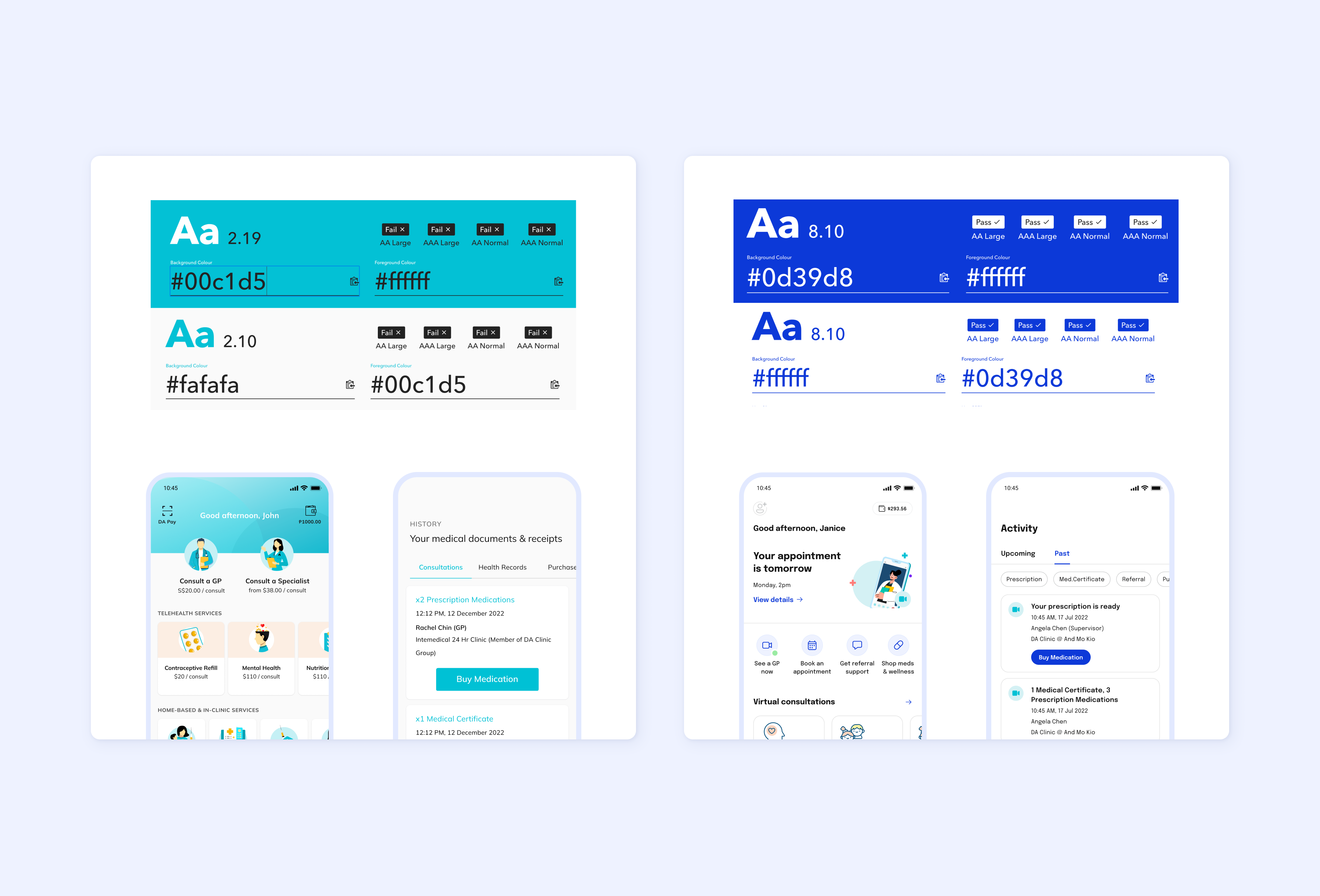
Using Figma, they replaced the light blue brand colour with a more contrast-friendly shade, simplified icons to reduce distractions, and decluttered layouts for easier navigation.
“Our top priority is to achieve simplicity and accessibility across diverse demographics in Southeast Asia. In our redesign, we simplified the visual language and de-labeled the interface, making it more intuitive and user-friendly,” says Vani.
These changes, made in collaboration with the marketing team, helped streamline the interface and focus users on the information they needed most. Rapid prototyping in Figma allowed the team to test these updates with users in real-world scenarios.
The results speak for themselves—DA saw a noticeable improvement in its Google Play ratings, with users praising the cleaner, more intuitive design. “When you are sick, your mind is already clouded. So it’s important that the user experience is clean and neat,” says one user.
Seamless design <> development handoffs with Dev Mode
Figma’s Dev Mode has fundamentally reshaped how Doctor Anywhere’s design and engineering teams collaborate, ensuring smooth and efficient workflows. By providing engineers with instant access to design specs, variables, and annotations directly within Figma, Dev Mode eliminated the need for external tools and drastically reduced the likelihood of errors during handoffs.

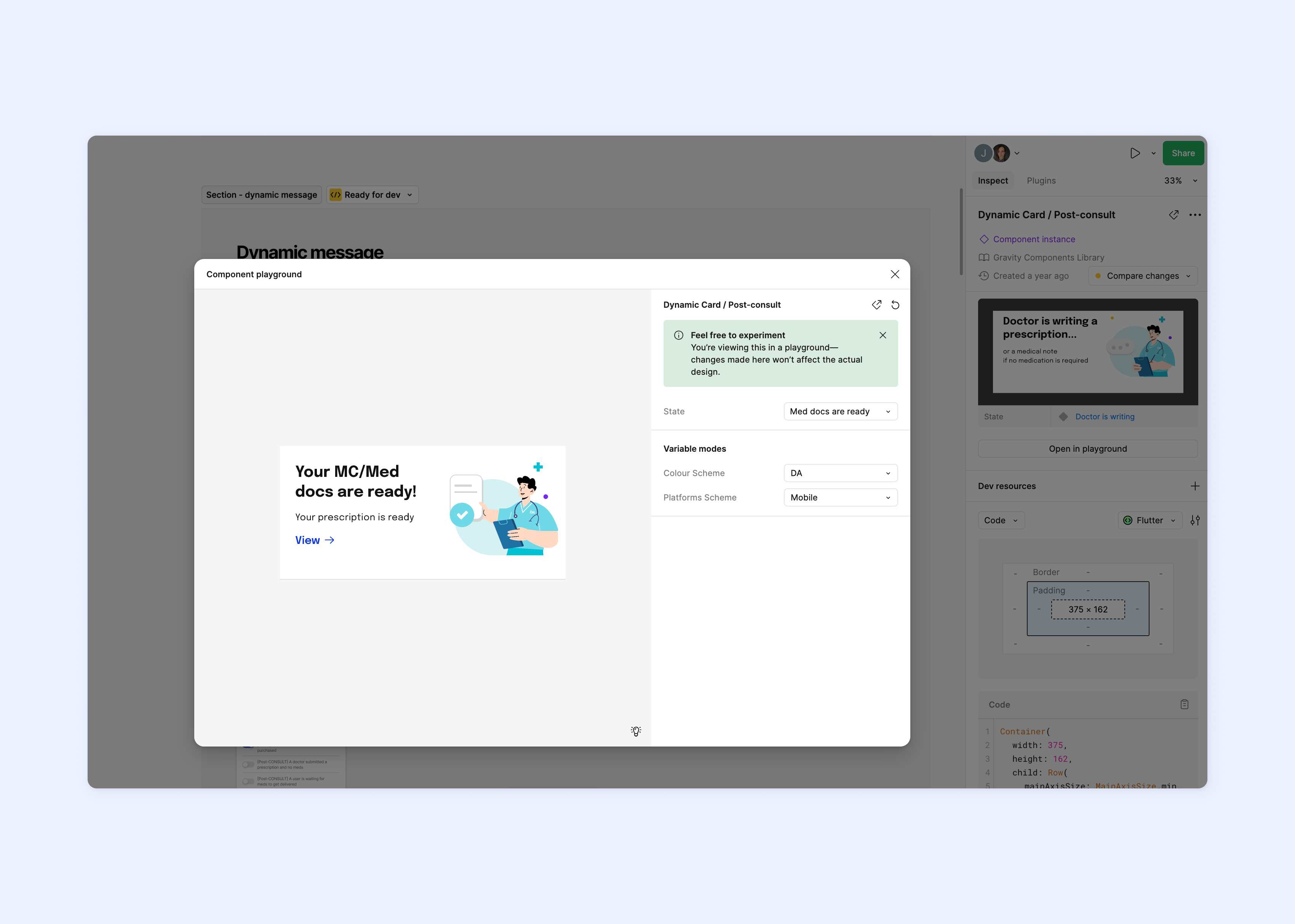
“Previously, we relied on external tools to share specs. With Dev Mode, everything is in one place. It’s simplified the process and improved accuracy,” says UI Designer Grace Oliva.
The impact of these improved workflows was particularly noticeable during two key projects: the rollout of DA’s revamped telehealth app experience and the launch of a new employee benefits mobile app.
Both projects operated under tight deadlines, but the use of reusable components and streamlined handoffs via Dev Mode ensured timely delivery without compromising quality.
“With Dev Mode, engineers can easily access specs for typography and colour tokens, eliminating back-and-forth communication and reducing the risk of errors. It’s a seamless integration that speeds up delivery while maintaining quality,” says Anna.
The impact was clear: DA saw around 30% boost in efficiency across design-to-development workflows. This newfound speed and alignment enabled the team to deliver projects more quickly while maintaining the seamless, quality experiences users expect.

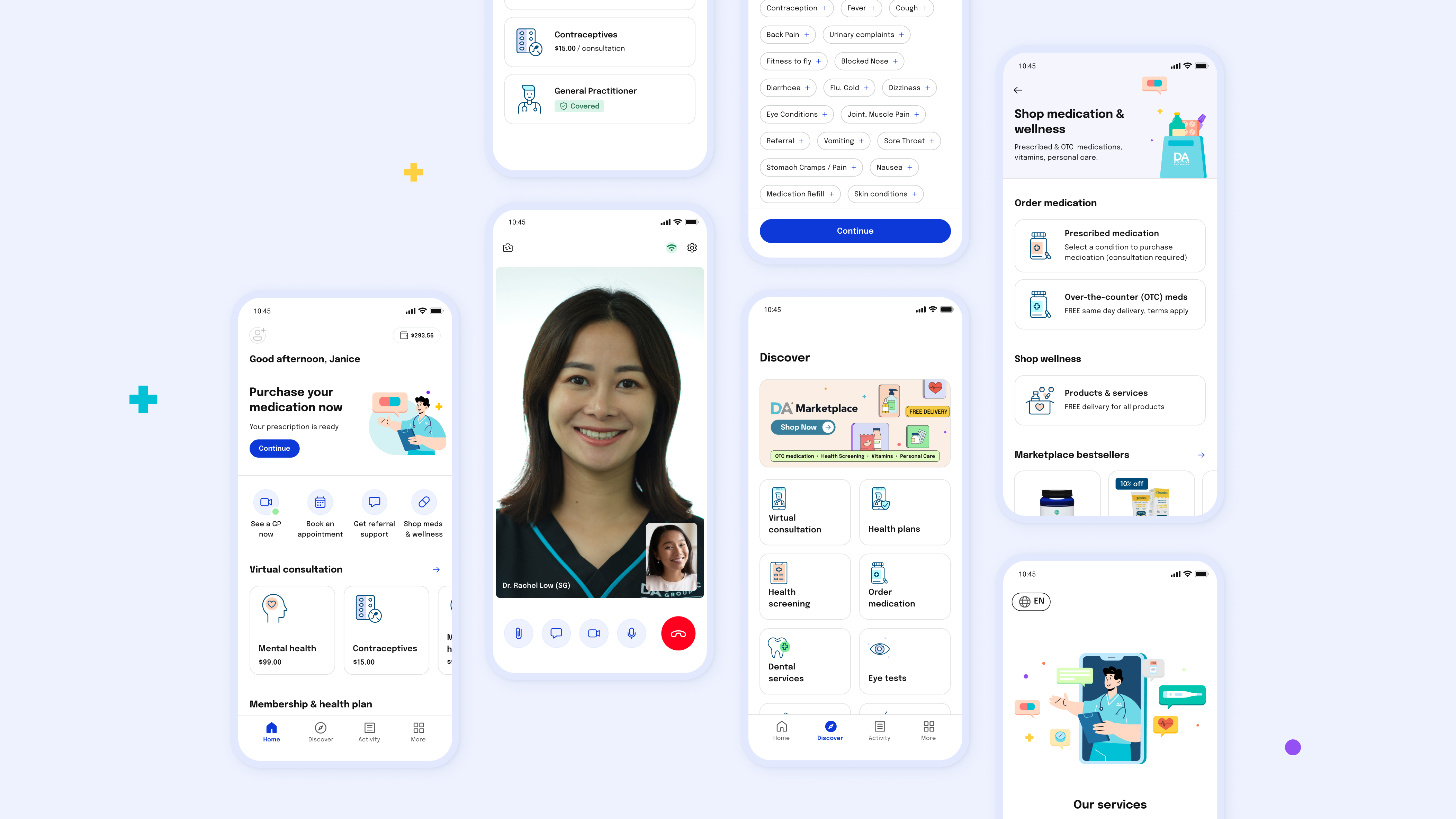
Shaping the future of healthcare in Southeast Asia
As DA further expands and integrates its healthcare offerings, it plans to introduce more advanced token-based solutions into Gravity. These updates will provide even greater flexibility across platforms while maintaining high accessibility standards.
“Gravity will keep evolving. We’re focused on making it even more powerful and adaptive, especially as we expand to new markets,” says Anna.
The team is also looking forward to leveraging Figma’s upcoming AI-powered features to further enhance productivity.
Anna adds, “I’d love for Figma’s AI to suggest components based on what I’m working on. It would save so much time and make the design process even smoother.”
As DA continues to grow, Figma remains a valuable tool in advancing its commitment to accessible, patient-centred care.
About Doctor Anywhere
Industry: Health and Human Services
Location: Southeast Asia
Number of Customers: Over 2.8 million users
Business Challenges: Building and maintaining design systems, Breaking down team silos
Products: Figma, FigJam, Dev Mode
See how Figma can help you scale design
Great design has the potential to differentiate your product and brand. But nothing great is made alone. Figma brings product teams together in a fast and more inclusive design workflow.
Get in touch to learn more about how Figma can help companies scale design.
We’ll cover how Figma can help:
- Bring every step of the design process—from ideation, to creation, to building designs—into one place
- Accelerate design workflows with shared company-wide design systems
- Foster inclusivity in the product team process with products that are web-based, accessible, and easy to use